Critical Pedagogy and Identity Workshop
Credits
Workshop format by: Ricardo Eversley
Photography: Ricardo Eversley
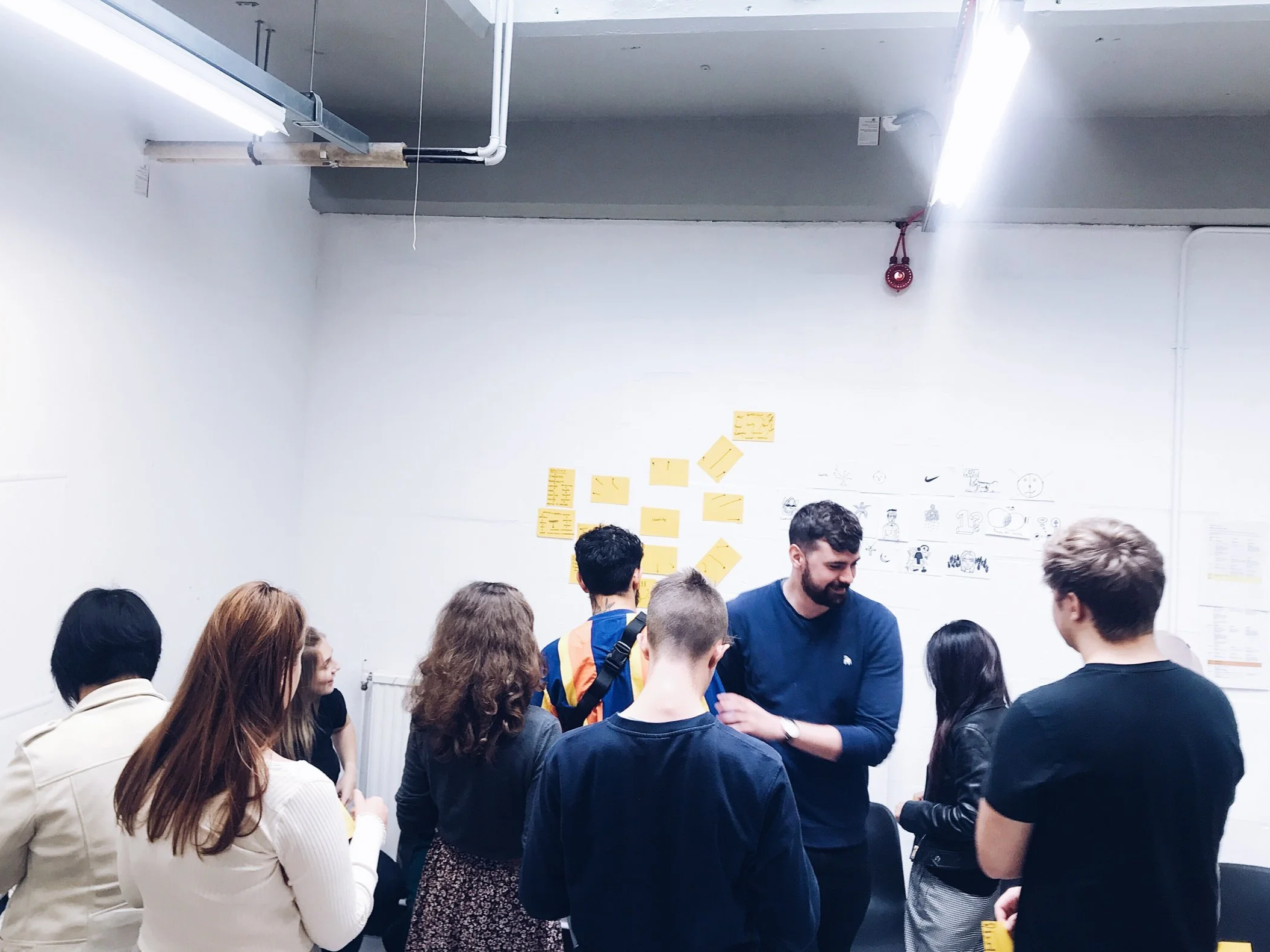
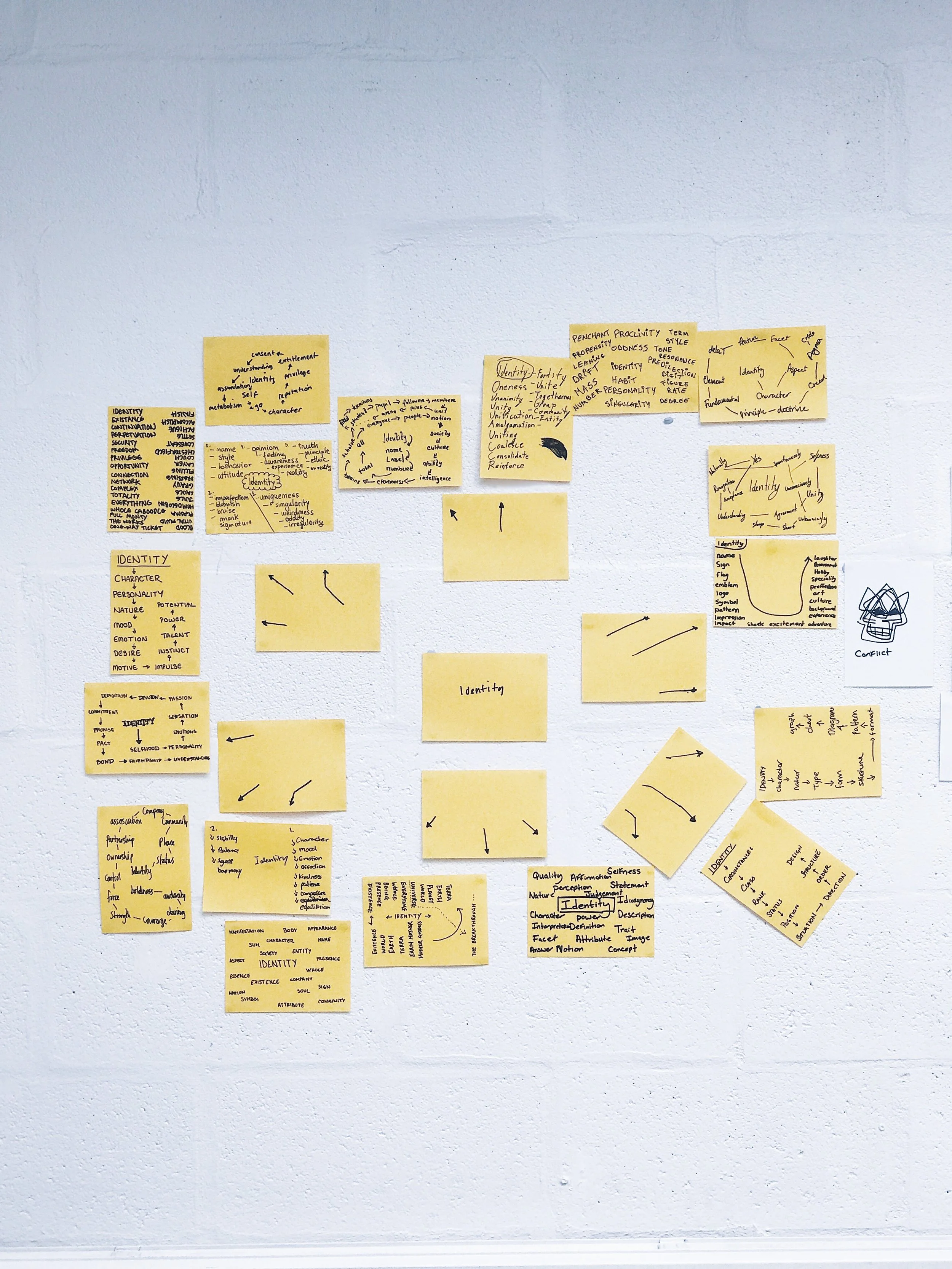
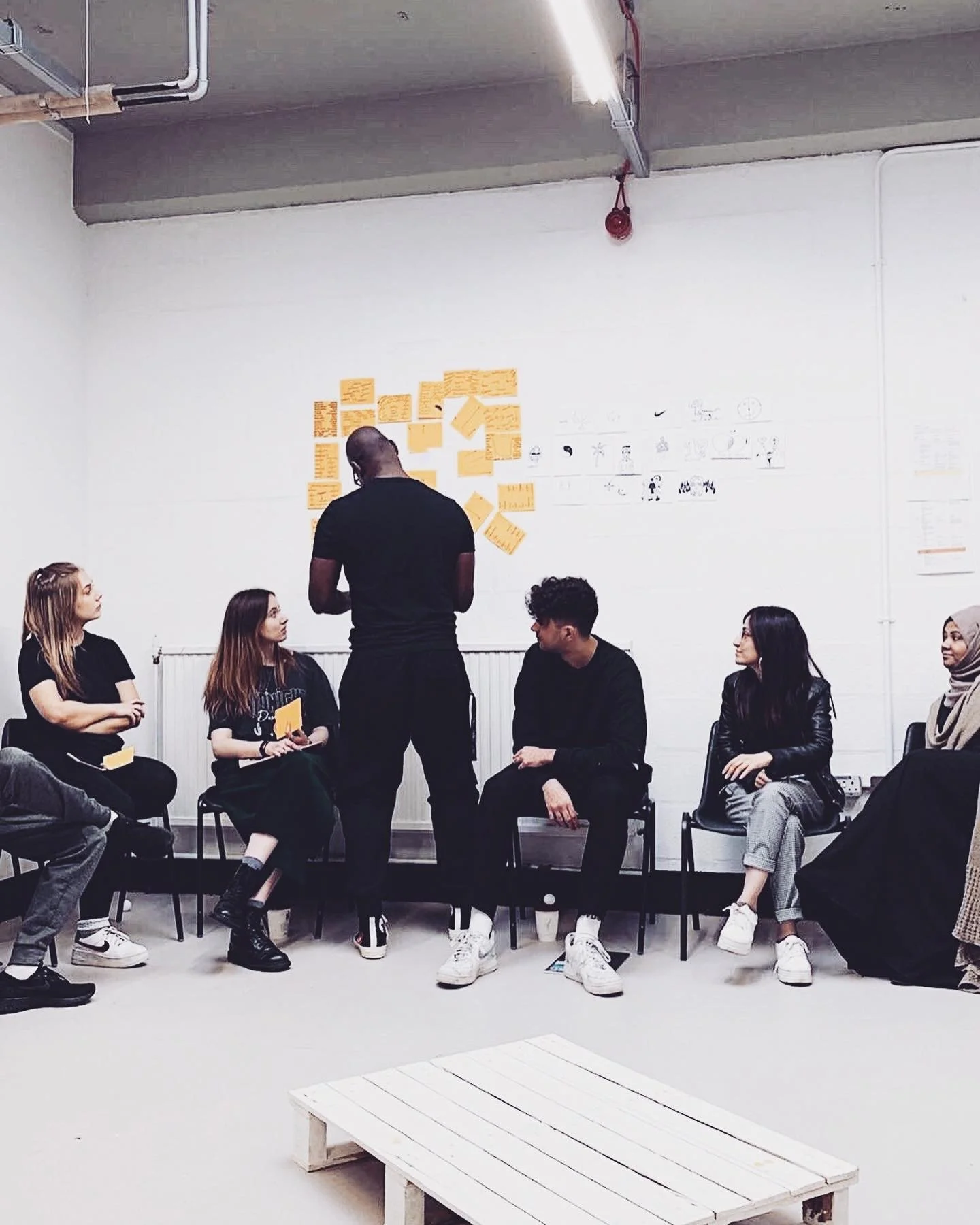
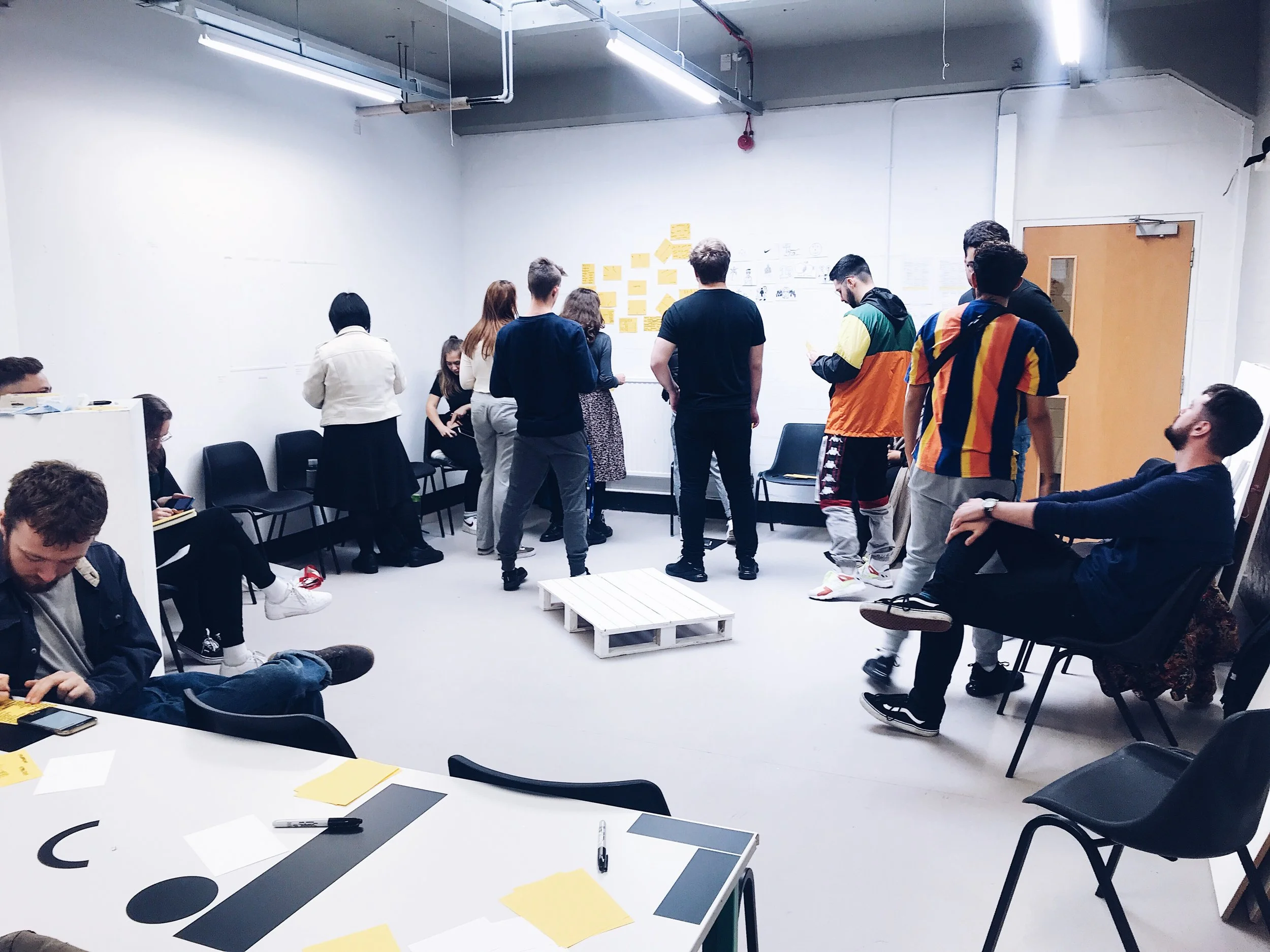
This co-working series of workshops aimed to generate tangeble teaching and learning outcomes via the collation of results from BA Graphic Design students.
The studio (analog) wall which doubled up as a digital wall (miro) looked at the below statement as a starting point.
Humans live with complexity. Intersecting and hierarchical differences based on the indicators of identity (race, class, gender, sexual orientation and others) often make cross-cultural learning challenging. “Only the circle can accommodate the differences between all those people” (Elder Danny Musqua, June 2004).

Project Overview
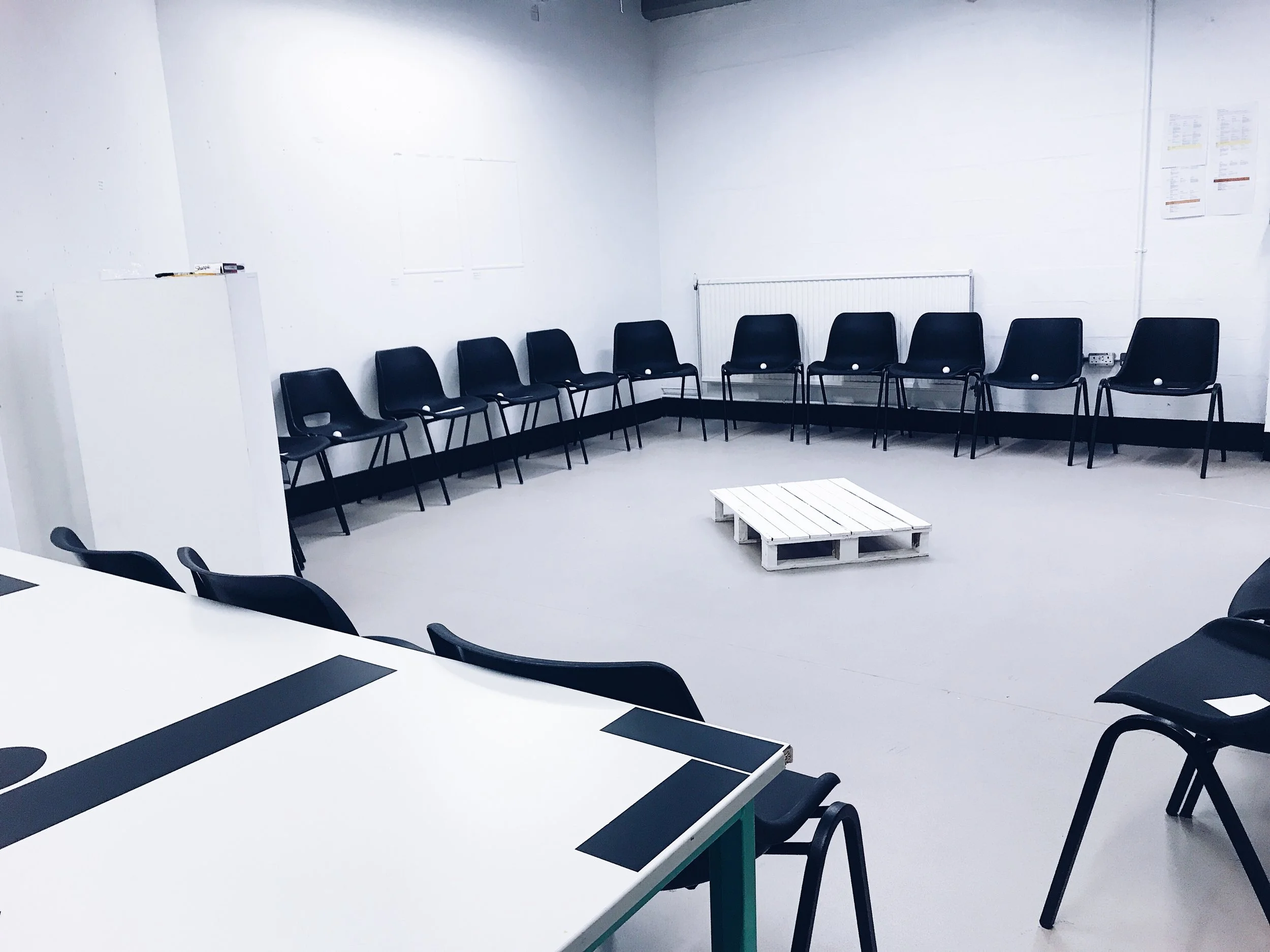
Traditional studio teaching often reflects hierarchical models of knowledge transmission, with the tutor positioned as the primary source of expertise. Circle-based learning challenges this convention by creating environments where dialogue, reflection and shared enquiry become central to the learning process.
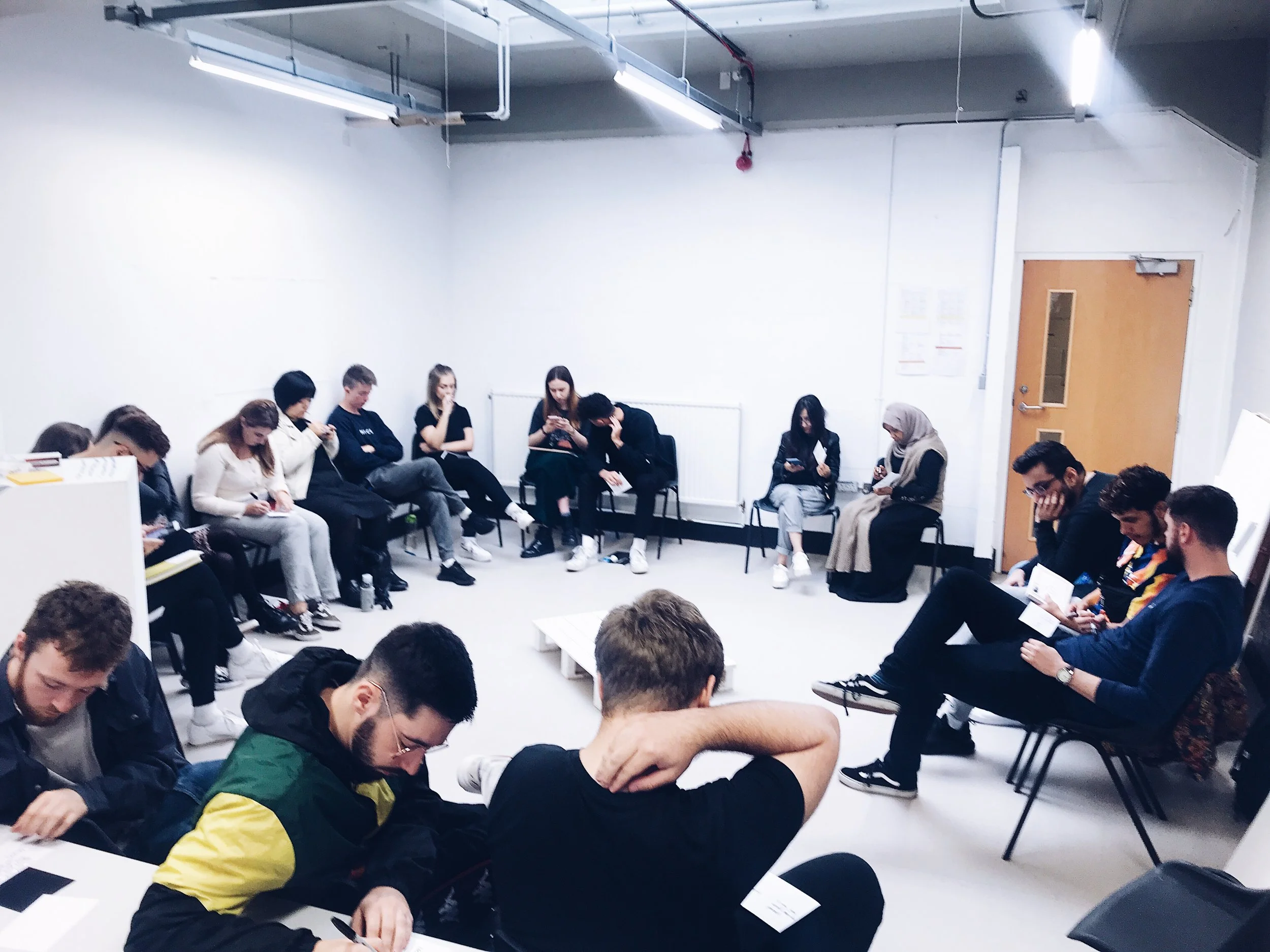
The project examines how circles can be used throughout the creative process, from project briefings and critiques to collaborative ideation, peer feedback and reflective practice, to develop more confident, independent and critically engaged designers.
Rather than functioning as a classroom layout alone, the circle becomes a design methodology for learning.
Senior Lecturer in Digital Innovation: Ricardo Eversley
Senior Lecturer in Digital Innovation: Ricardo Eversley

Why the Circle?
Ideas are developed through discussion, critique, iteration and reflection. Yet many learning environments continue to reinforce passive modes of participation especially within formal classroom architecture and layout.
By removing the "front" of the classroom, the circle changes more than sightlines, it changes the dynamics of conversation. Every participant becomes visible. Every contribution occupies equal physical space. The educator shifts from presenter to facilitator, creating conditions in which knowledge is co-constructed rather than simply delivered.
Educational Impact
The project contributes to broader discussions surrounding:
Higher Education pedagogy
Creative education
Design education research
Inclusive curriculum design
Active learning methodologies
Studio-based learning
Community-centred teaching
Student-centred learning
Rather than viewing classroom space as neutral, the project considers spatial design as an educational technology capable of influencing communication, belonging and learning outcomes.